South West Disabled Artist Gathering
Introduction
Where We Land is a new gathering for disabled, deaf and neurodivergent artists from across South West England. Created by Spectroscope, the day brings together conversations, workshops, keynote speakers, quieter spaces and opportunities to reconnect with creative practice.
This is not a traditional conference. It is a thoughtful, artist-led space shaped around reflection, ambition, experimentation and community. Whether you are emerging, mid-career or established, Where We Land is a chance to pause, connect and imagine what comes next.
Date
• Wednesday 9th September, 2026
• 10:00am - 4:30pm
Location
Ham Green House, near Bristol
Why Come?
A space to reconnect with creative practice
Many disabled, deaf, neurodivergent artists spend huge amounts of time navigating systems, advocating for support, adapting environments or carrying responsibilities that sit around their creative practice rather than inside it.
Where We Land creates space to reconnect with art-making, creative thinking, experimentation and the reasons people began making work in the first place.
Across the day you will encounter keynote talks, artist conversations, workshops, reflective moments, quieter spaces and opportunities to connect with artists from across the South West and beyond. The atmosphere will be welcoming, open and artist-led. Some people may come to meet future collaborators. Others may come to listen, rest, reflect or reconnect with their own creative thinking.
The programme moves between national conversations and South West perspectives, creating space for discussion about artistic ambition, experimentation, visibility and future possibilities for disabled-led practice.
This is a gathering designed not only around access, but around creative energy, exchange and imagination.
Cathy Mager, Founder of Spectroscope
Who can attend?
Where We Land welcomes disabled, deaf and neurodivergent artists, alongside artists living with long term health conditions working in any medium.
The gathering is focused on artists based in:
- Bristol
- Bath & North East Somerset
- North Somerset
- South Gloucestershire
- Gloucestershire
- Wiltshire
- Somerset
- Dorset
- Devon
- Cornwall and Isles of Scilly
Whether you are at the beginning of your practice or have been working professionally for many years, you are warmly welcome.
We welcome disabled people working in arts-related roles such as producers, curators, arts administrators and cultural leaders. We welcome anyone committed to strengthening opportunities for disabled artists and helping creative practice thrive across the region and beyond.
Speakers & Programme
Yiska
Alt Desciption
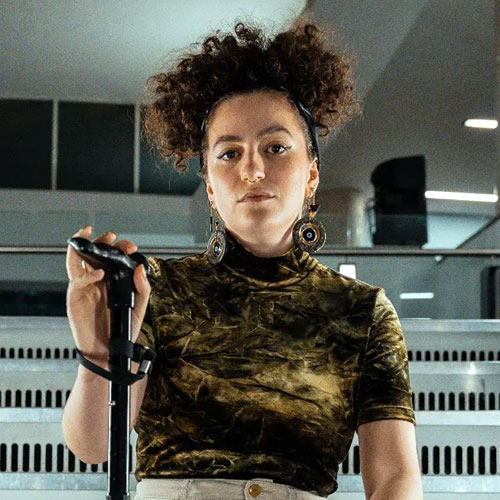
Photo of Yiska. Yiska is pictured seated on a flight of metal stairs. She is wearing beige trousers, a brown velvet polo neck top, large dark hooped earrings. She is a mixed heritage woman with curly hair tied up in a bushy bun above her head. She has a confident direct facial expression. She has holds a walking stick in one hand and is wearing a ring in the other.
Biography
Yiska is the founder of NoteWorthy Access, an expert, lived experience-led accessibility consultancy specialising in events. Yiska is also Co-Chair of Trustees at BDEF (Bristol Disability Equality Forum), a Trainer at Attitude is Everything, and a Disabled artist and established performer with over ten years’ experience.
Emmanuella Morsi
Alt Desciption
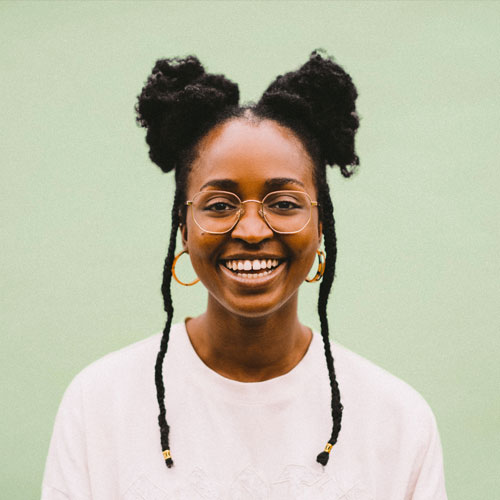
Photo of Emmanuella Morsi. They is shown smiling broadly in front of a light green backdround. They is a Black african person with braded hair which is tied in two big buns either side of their head. They are wearing hooped gold earrings and a white top.
Biography
Emmanuella Morsi (Studio Morsi) is an award-winning multi-disciplinary artist, researcher and production manager. Nigerian-born and Bristol-raised, they predominantly use research and various mediums to amplify impact and innovate inclusive storytelling around climate, with grassroots and large-scale projects across the world. Most recently awarded 2025 Emerging Innovator, Morsi’s work is renowned for reimagining new ways of working.
Faye Stewart
Alt Desciption
Coming Soon
Biography
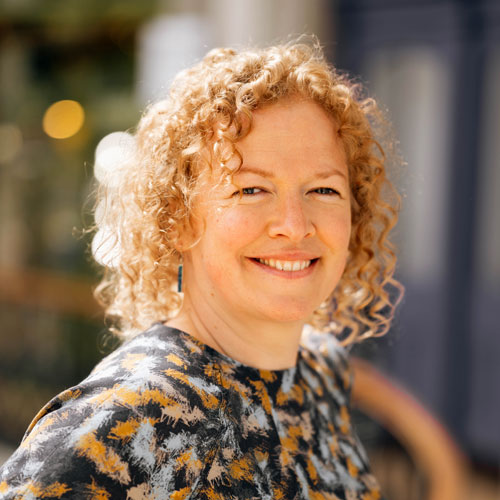
Faye is Executive Director of Spectroscope. She is a Deaf leader with over 20 years’ experience across communities, culture and public funding. She spent 16 years at Arts Council England across regional and national roles, most recently leading national accessibility work through the Access Changemaker programme and championing adoption of the Social Model of Disability. Her practice bridges communities and systems, shaping more inclusive funding, governance and programmes. She is a Trustee of the Centre for Deaf and Hard of Hearing People in Bristol, sits on Creative UK’s EDI Advisory Group, and is an Independent Member of the Liverpool 2027 Stakeholder Board.
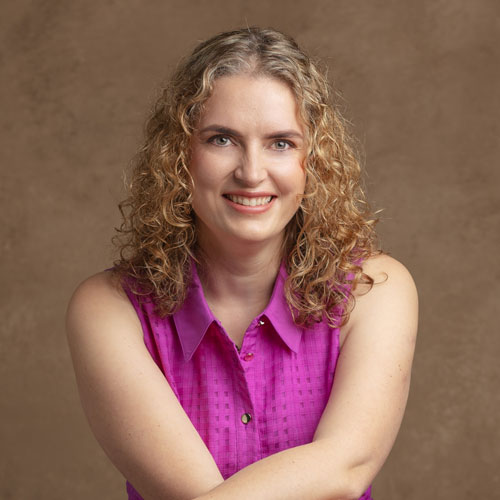
Anica Zeyen
Alt Desciption
Photo of Anica Zeyen, a white woman with curly dark blonde hair, sitting on a gold-coloured stool. Anica is slightly leaning forward with her wrists crossed lying on top of her crossed legs. She wars a pinky purple sleeveless buttoned up slightly beyond knee long dress. Her finger nails are pink. Next to her lies her black guide dog waring her high vis yellow harness.
Biography
Anica Zeyen is a blind Professor, author, speaker, and creator working at the intersection of disability, inclusion, and entrepreneurship. Based at Royal Holloway University of London, she researches how disabled people lead, innovate, and navigate systems not built for them – bringing lived experience to everything she does. She has written four books, delivered 100+ talks, and produces documentaries, podcasts, and social media content to bring disability conversations beyond the academy.
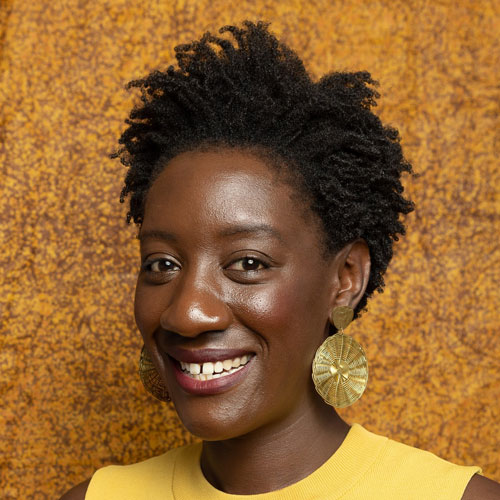
Birungi Kawooya
Alt Desciption
Photo of Birungi Kawooya. Birungi is pictured with a warm broad smile in front of a bright textured ochre background, she is a black woman with short spiky textured afro hair, she is wearing a golden medalion shaped earring and a bright yellow top.
Biography
Birungi Kawooya is an artist-researcher and creative facilitator whose work explores how creative practice can support reflection, restoration and personal transformation. Working at the intersection of art, wellbeing and cultural inquiry, she designs gentle, sensory-led experiences that invite people to slow down, reconnect with themselves and make meaning through embodied reflection. Her facilitation is known for its warmth, sensitivity and depth—creating spaces where people feel able to arrive as they are. Drawing on materials, ritual and conversation, Birungi’s work centres care, curiosity and collective presence. Most recently, during a residency with Nubian Life Resource Centre in partnership with Imperial Health Charity, she supported Black and Asian elders with complex needs to explore their creativity through a series of artist-led sessions, culminating in a collaborative barkcloth tapestry now installed at Charing Cross Hospital. This work reflects her ongoing interest in how tactile materials, collective reflection and creative practice can foster connection, dignity and belonging.
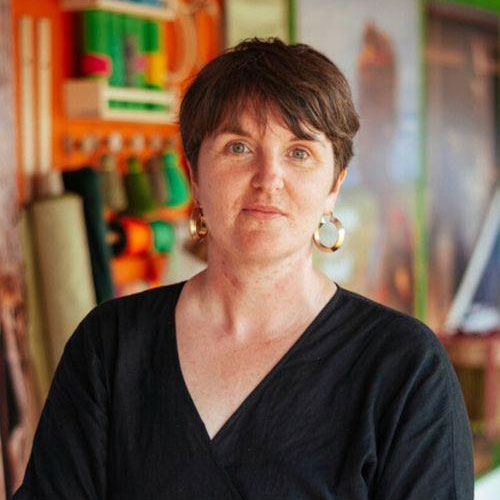
Alice Bowen Churchill
Alt Desciption
Photo of Alice Bowen Churchill. Alice is wearing a blue v necked dress and large gold hooped earrings, she has short brown hair, blue eyes and white skin. She stands in front of a backround of bright multi colured fabrics and banners.
Biography
Alice Bowen-Churchill is an artist and designer based in Bristol, UK, who creates interactive artworks, participatory projects, workshops, and events. She is fascinated by the power of collaboration, creative action and how they can start a conversation. She has been using collaborative stitching to slow us down, bring us together, and transform something small into something lasting. Alice has worked with a wide range of organisations including Oxfam, Wellcome Collection, Spectroscope, Glastonbury Festival, Latitude, Boardmasters and London Fashion Week.
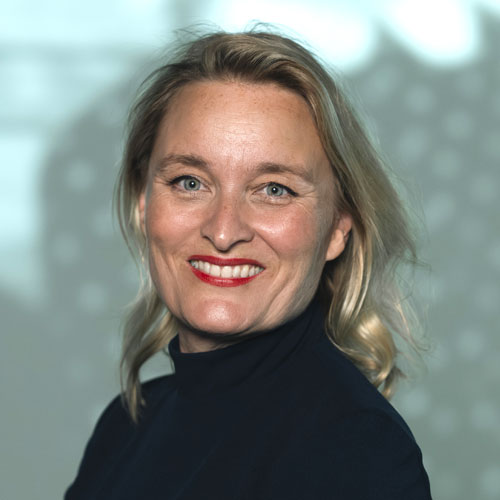
Cathy Mager
Alt Desciption
Photo of Cathy. Cathy has blonde shoulder length hair she is wearing a dark blue top, red lipstick. She is white with blue eyes and is smiling. Behind her is a grey backrgound.
Biography
Cathy Mager FRSA is a multi award-winning curator, artist and Artistic Director with over 25 years’ experience creating major public artworks, festivals and cultural programmes experienced by millions of people. A Clore Fellow and founder of Spectroscope, she has led projects for organisations including Southbank Centre, Historic Royal Palaces and Art on the Underground, and has collaborated with Wellcome Collection, Science Gallery and the Museum of Modern Art, Shanghai.
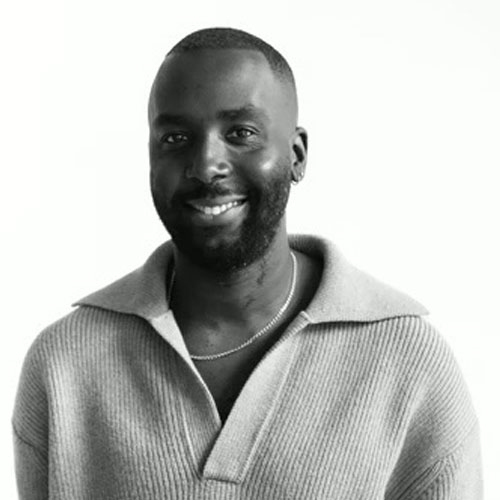
Christopher Laing
Alt Desciption
Photo of Christopher Laing shown in black and white, Christopher is smiling broadly, he is a black man with buzz cut black hair. He is wearing a light open neck jumper and wearing a simple chain necklace.
Biography
Christopher Laing is an architectural designer, consultant, Deaf Space expert, founder of Deaf Architecture Front (DAF), and director of Studio Yokwesi Ltd, a Deaf-led design studio. He has worked at Haworth Tompkins for the past nine years and currently works part-time while studying for his Part 3 qualification to become a registered architect. Through his practice, research and advocacy, Christopher champions Deaf-led design, accessibility and inclusion, bringing Deaf perspectives into architecture, culture and the built environment.
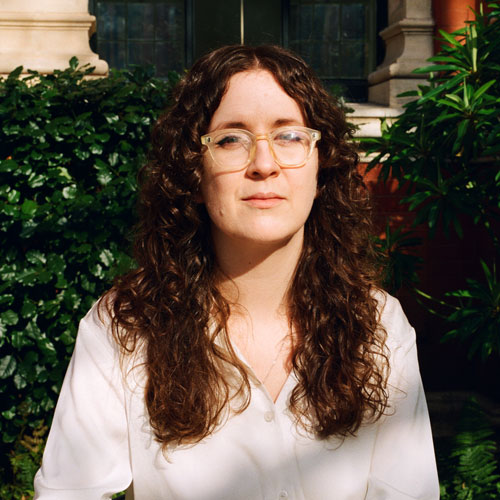
Natalie Kane
Alt Desciption
Photo of Natalie Kane. Natalie is white with long black wavy hair. with a centre parting They is wearing white framed glasses. They is sitting with one arm on a table, and has an open neck white top and has tatoos on both lower arms. They has a calm, confident and non smiling expression.
Biography
Natalie D Kane is a curator and writer based in London. They are Curator of Digital Design at the V&A, where they research and collect digital design and society, including its preservation, display and access. With the V&A, they curated Design and Disability (June – Feb 2025, opening at V&A Dundee June 2026) and the official U.K. pavilion at the 2019 XXII Milan Triennale, showing the work of Forensic Architecture. Natalie is a Trustee of the British Games Institute / National Videogames Museum. Recently, they have joined the Barbican Renewal’s Access and Inclusive Design Advisory Group. They are editor of Design and Disability (2025), published with the V&A. In other capacities, they are Deputy Leader, Inclusion, Democracy and Culture for Lambeth Council.
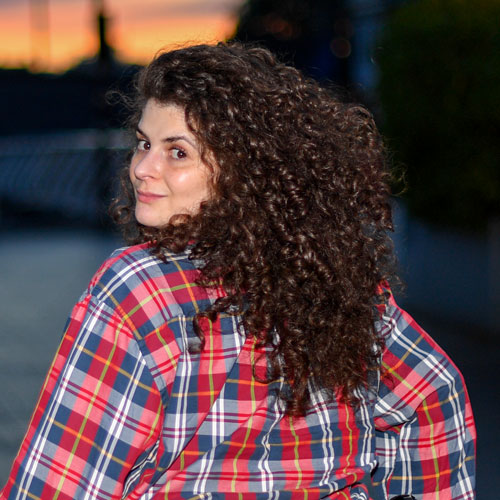
Sophia B Wheeling Forward
Alt Desciption
Photo of Sophia B. Sophia is a woman with white skin and long black wavy hair. She is wearing a red and blue checked shirt. The photo is taken from behind and she is looking over her shoudler with a slight smile. The background appears to be an evening scene with sunset and street lights visible.
Biography
Sophia B. is an artist, creative practitioner and activist who documents life as a disabled person in London whilst championing access, joy, and community. Through social media, she shares information about accessible events across the city, driven by her belief that disabled people have the right to vibrant social lives and equal opportunities to experience culture and connection. Drawing on her lived experience, Sophia creates video content that encourages people to explore new places and try new experiences. She is deeply committed to improving accessibility not only in everyday spaces but also across the arts, culture, and nightlife sectors. Alongside this, she is passionate about getting disabled artists’ work to reach wider audiences and gain greater visibility. Recently, Sophia co-produced and contributed artwork to the “Oh, how we dance: Disability and Nightlife” installation at the Museum of London Docklands.
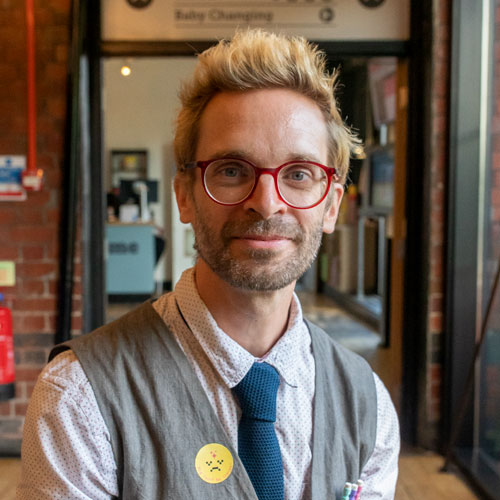
Joseph Wilks
Alt Desciption
Photo of Joseph. He has short blonde hair with round red rimmed glasses, a short beard, rolled up sleeved white shirt, blue tie and grey waistcoat with coloured pens in the pocket. He is seated in a wheelchair and is in a building with signage, wooden floors and red brick walls.
Biography
Joseph Wilk is an artist and programmer who uses the digital to explore disability and disability to explore the digital. He often works with automative forms of expression that utilize new interfaces to work with alternative bodies. His experience of disability—living with pain, physical limitations, disillusionment and disconnection—strongly impacts his practice. He deconstructs, misuses, and repurposes software and hardware to challenge notions of ownership, narrative, and visibility.
Stephen Lightbown
Alt Desciption
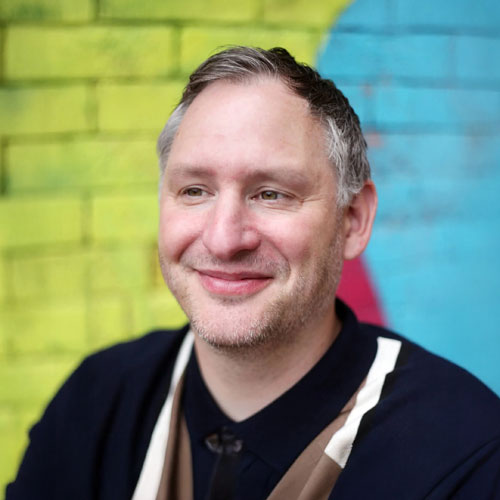
Photo of Stephen Lightblown. Stephen is white and has short cropped hair which is grey and white at the sides. He has brown eyes, is smiling and is wearing a brown, black and white polo shirt. Behind him there is a painted wall of bright geometric colours including neon yellow, blue and pink.
Biography
Stephen Lightbown is a Bristol-based poet, performer, picture book writer, and disability rights champion. Drawing on over 30 years of lived experience as a wheelchair user, Stephen uses his voice to explore and challenge perceptions of disability. He is the author of two poetry collections for adults and the critically acclaimed children’s collection, And I Climbed, And I Climbed—which was shortlisted for the CLiPPA Poetry Award and the UKLA Book Awards. He has performed at many poetry events across the country, and written and performed the one-person play A Life With PIP, about his experiences navigating the disability benefits system. Stephen is also the author of the picture book My Dad Can (published June 2026), for which he drew on his experiences as a disabled parent. His second poetry collection for children will be published in early 2027. When he isn’t writing, he can be found in the sea, having twice represented England at the World Disabled Surfing Championships;.
Rod Maclachlan
Alt Desciption
Coming Soon
Biography
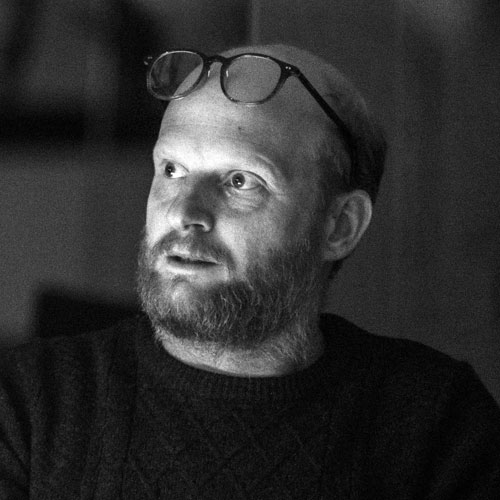
Rod Maclachlan is a visual artist, video and production designer whose work spans installation, experimental film, projection, live performance and music. With a background in sculpture and experimental filmmaking, his distinctive practice brings together physical effects, analogue processes and digital technologies to create inventive visual experiences. His work has been presented at venues including Tate Britain, Arnolfini and Battersea Arts Centre. As a video and production designer, Rod has worked with artists and organisations including Paolo Nutini, Murcof, Hauschka, Simple Minds, Noel Gallagher, Bristol Old Vic and the City of Birmingham Symphony Orchestra. Rod is a long-standing collaborator with Spectroscope, creating the technical and visual environments that enable the company’s experiments with projection, light and installation.
Ngaio Anyia
Alt Desciption
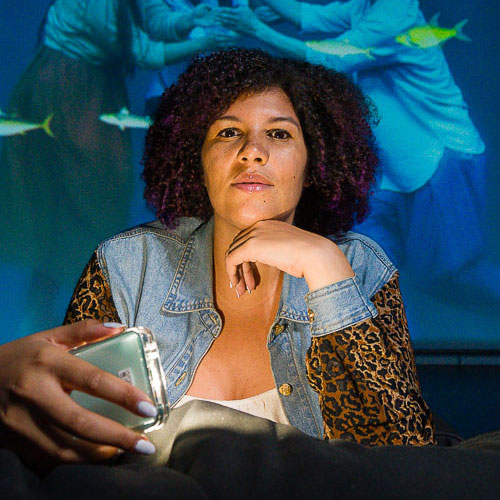
Ngaio is a Black woman with shoulder-length dark curly hair. She is seated facing the camera, resting one hand beneath her chin while holding a phone in the other. She wears a denim jacket with leopard-print sleeves. Behind her, a large blue-toned projection shows three people interacting underwater, surrounded by brightly coloured fish, creating a vivid, dreamlike backdrop.
Biography
Ngaio Anyia is a multidisciplinary artist, cultural producer, broadcaster and inclusive practice consultant working across music, live events, screen and organisational culture. Her practice explores identity, representation and belonging, bringing together storytelling, sound and cultural production.
Her work spans documentary and broadcasting, DJing and live performance, music supervision, festival curation and cultural programming. Ngaio has presented for BBC World and developed documentary work through the Netflix Documentary Fund. As founder of Booty Bass CIC, she has created platforms for underrepresented artists and curated stages and events at festivals including Glastonbury, Boomtown, We Out Here, Shambala and St Pauls Carnival.
Ngaio is an Associate Artist with Spectroscope and has created two original soundscapes for the company, bringing her distinctive approach to sound, storytelling and identity into Spectroscope’s multidisciplinary work. Alongside her creative practice, she works with arts and cultural organisations to challenge structural inequality and develop more inclusive ways of working.
Phoebe Barnicoat
Alt Desciption
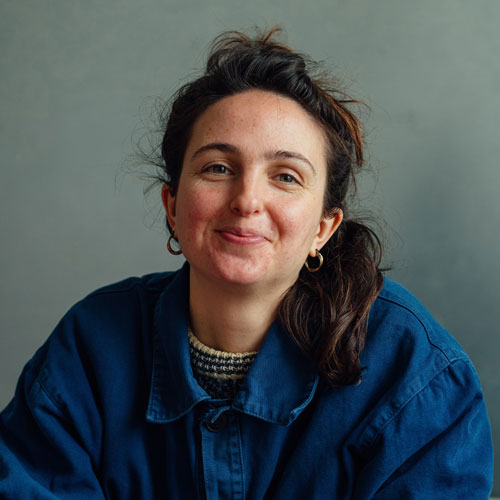
Photo of Phoebe Barnicoat, she is a white woman with dark long hair tied up, with a dark blue shirt sitting at a wooden table. She is weaing hooped gold earrings and is smiling.
Biography
Phoebe Barnicoat is an artist, producer and facilitator. In 2024, she co-founded Co-Motion, a Cornwall-based CIC connecting neurodivergent artists with creative technology.
With over 15 years’ experience in inclusive arts, Phoebe has worked with organisations including ActionSpace, Shallal, Project Ability and the Museum of Homelessness. As a Winston Churchill Fellow, she researched platforms supporting artists who are homeless, have learning disabilities or mental health issues in the US and Canada, including Creative Growth, the Los Angeles Poverty Department and Gallery Gachet. This research subsequently led to Phoebe co-founding Shallal Studios, a supported studio based in Cornwall.
Alongside her producing and facilitation work, Phoebe’s practice spans painting, digital animation, bricolage and collaborative film. Clowning and embodied play are central to her approach, shaping responsive, non-hierarchical creative relationships and creating spaces for experimentation. Her work has been exhibited and screened at Tate St Ives, the Centre for Recent Drawing, Christie’s and the Fleming Collection.
Phoebe is a graduate of the Royal Drawing School and the Glasgow School of Art, and a member of the Royal Watercolour Society.
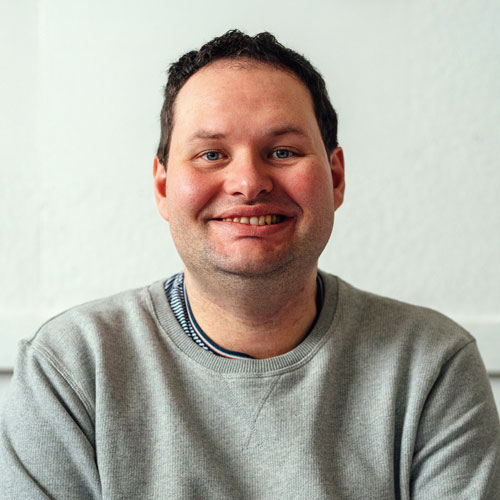
Kyle Coleman
Alt Desciption
Photo of Kyle. Kyle is a white man with short cropped brown hair, he is wearing a grey sweater and is smiling broadly. Behind him is a white wall with blue and yellow posters.
Biography
Kyle Coleman’s practice spans music, sound, drawing, animation, video and printmaking. A non-speaking autistic artist, his work explores sensory experience, rhythm and visual storytelling.
Kyle has collaborated with Co-Motion and artists across the UK to create immersive sound- and image-based work. His long-term collaborators include Stuart Blackmore (Cling Clack Production Studios), Eddie Callis and Tony Minnion.
A published recording artist, Kyle has performed on BBC Music Introducing, with his music receiving airplay on BBC Radio 6. In 2024, he featured on The Telepathy Tapes podcast and is currently contributing music to its forthcoming documentary.
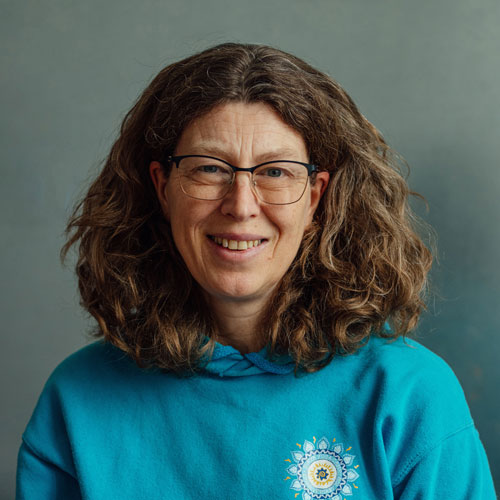
Lou Brett
Alt Desciption
Lou is a white woman with long shoulder length light brown hair. She is wearing a light blue top with a round white logo and glasses which have a black top rim. She is smiling.
Biography
Lou Brett has worked in socially engaged arts and film since the early 1990s, undertaking roles in facilitation, project production, fundraising and strategic planning.
Following a Master’s degree in Television for Development, Lou worked with Brighton-based women’s film co-op WideEye to deliver video clubs for vulnerable young people, harnessing the creative authorship offered by video as a new, non-academic and democratic medium. This led to producing roles on a DFID-funded community film project in Ghana and public art engagement projects in Kent for Strange Cargo Arts Company. She also helped establish Screen South, the newly devolved screen agency for the South East region.
She began working as an arts facilitator, project producer and strategic fundraiser for the pioneering inclusive arts charity Shallal in 2014, establishing Shallal’s visual arts studio with Phoebe Barnicoat five years later and collaborating closely with artists with diverse needs. She left Shallal in 2024 to co-found Co-Motion with artists Phoebe Barnicoat and Eden Harrison, exploring creative technology as a tool for nurturing new creative voices and perspectives.
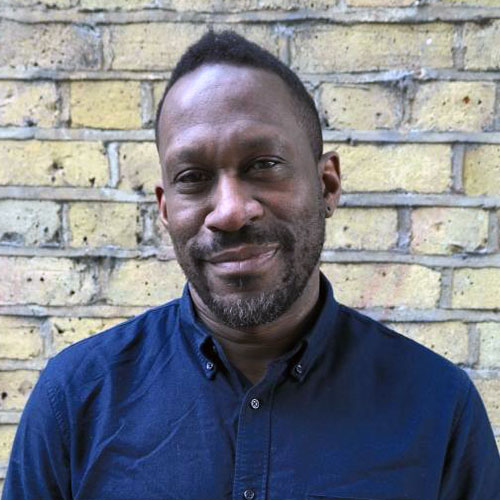
David Ellington
Alt Desciption
Visual description: David is a Black man with short dark hair and a neatly trimmed beard. He is wearing a dark navy button-up shirt and is photographed from the chest up, facing the camera with a warm, slight smile. Behind him is a pale yellow brick wall.
Biography
David Ellington is an award-winning Bristol-based deaf artist, actor and creative whose work spans film, television, performance and visual storytelling. He became known to audiences across the UK through his prominent role in Channel 4’s groundbreaking Paralympic campaigns, helping to transform the visibility of disabled people on British television.
David works across film, television and the arts as a performer, artist and deaf creative consultant, collaborating with organisations including Watershed, Ad Infinitum and Flarewave Festival. He is an Associate Artist with Spectroscope, most recently creating and performing work at Edinburgh Deaf Festival, and features in the forthcoming experimental poetry film Holding Time, created by Spectroscpe founder, Cathy Mager.
In 2018, David was recognised in Bristol’s 100 BME Powerlist.
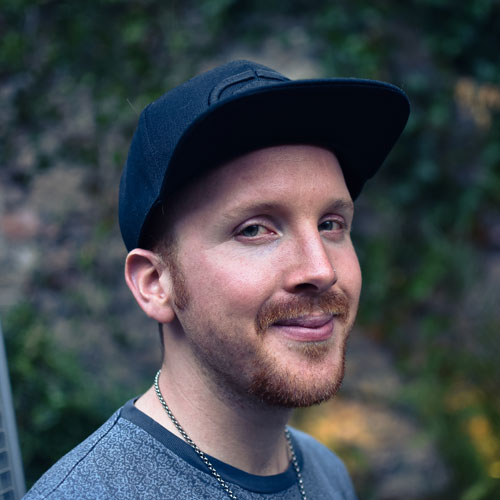
Danny Carlo Pandolfi
Alt Desciption
Danny is a white man with a short reddish-brown beard and moustache. He is wearing a black baseball cap, a patterned grey top and a silver chain necklace. Photographed from the shoulders up, he is turned slightly to the side and looking towards the camera with a small smile. The background is softly blurred with green foliage.
Biography
Danny Carlo Pandolfi a poet, rapper, writer, educator and cultural producer from London, now living in Bristol, UK. As a producer in the arts, he founded and directs Raise the Bar, one of Europe’s leading live poetry nights based in Bristol, is co-founder and Artistic Director of Lyra – Bristol Poetry Festival, and coordinator of Bristol Palestine Film Festival.
Louisa Adjoa Parker
Alt Desciption
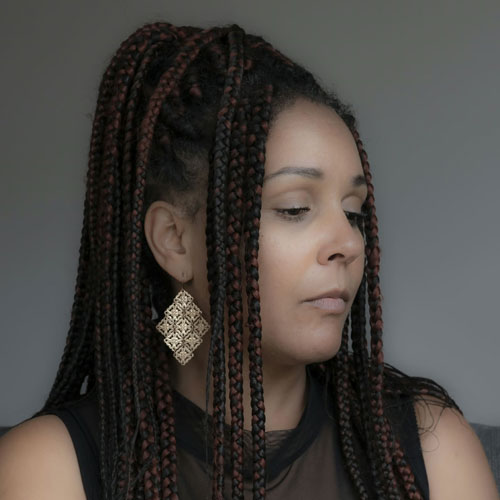
Louisa is a woman with long black and deep auburn braids, swept up at the crown and falling over her shoulders. She is shown in profile, looking down and to one side, wearing a sleeveless black top and a large ornate gold drop earring. The portrait is softly lit against a plain grey background.
Biography
Louisa Adjoa Parker is a writer and poet of English-Ghanaian heritage who lives in South West England. Her first poetry collections were published by Cinnamon Press, and her third, How to wear a skin, was published by Indigo Dreams. Her debut short story collection, Stay with me, was published in 2020 by Colenso Books. Her poetry pamphlet, She can still sing,
was published by Flipped Eye in June 2021. She is currently writing a coastal memoir, to be published by Little Toller Books.
Additional speakers and workshop contributors will be announced over the coming months. This section will be updated regularly with contributor biographies, photographs and programme information as announcements are released. Please check back for updates.
Schedule for the day
Where We Land runs from 10.00am — 4.30pm.
A detailed downloadable programme will be uploaded here soon.
The day will include:
- registration and soft welcome
- keynote conversation
- workshops and creative sessions
- lunch
- afternoon discussions
- quieter rest periods throughout the day
- closing reflections
The programme has been designed to allow visitors to move through the day flexibly and at their own pace.
Workshops and creative sessions
Throughout the day, artists will be invited to take part in a series of workshops, creative sessions and reflective activities.
The programme will include opportunities for:
- conversation and discussion
- sensory and nature-based workshops
- immersive and projection-based experimentation
- quieter reflective activities
- informal creative exchange
Some sessions will take place indoors within the garden room spaces, while others will use the surrounding grounds and gardens of Ham Green House. Workshop details and contributors will be added over the coming months.
Food, Rest & Quieter Spaces
Lunch will be provided by the Penny Brohn catering team.
Their talented chefs create fresh, handmade, seasonal meals designed to be healthy, nourishing and full of flavour. The menus are unique to Penny Brohn UK and reflect the belief that food which supports wellbeing and immune health can also be genuinely delicious.
Throughout the day there will be a quiet sensory breakout space available for rest, downtime or quieter conversation away from the main programme.
Visitors are welcome to move in and out of sessions as needed and use the event in the way that works best for them.
The gardens at Ham Green House will also be available throughout the day for reflection, rest and quieter conversations, with the majority of outdoor spaces accessible for wheelchair users.
Where We Land has been designed with the understanding that people experience events differently, and that rest, pause and flexibility are an important part of participation.
Access information
- Wheelchair accessible
- BSL interpretation
- BSL Interpreters are Freya Mcluckie, Karen Huntley.
- Live Captions are available for talks and panels..
- Assistance dogs welcome
- Quiet sensory breakout space
- Visual description integrated into talks
- Accessible gardens
There is level access to dining rooms, bedrooms and communal spaces used during the event. Two of the workshops are reached by a ramp.
The venue includes:
- Ample accessible parking close to the entrance
- Two wheelchair accessible bathrooms close to event spaces
- Accessible pathways through the majority of the gardens
- HEPA Air Purifiers installed in event spaces
Getting here
Ham Green House is located close to J19 of the M5 and a few miles from Bristol city centre.
Address
Ham Green House, Pill, Bristol
Postcode: BS20 0HH
What Three Words
Marked.curve.penny
Bus: If you are travelling by public transport, you can catch the X4 bus to Pill and get off at The Anchor stop. From there, it is approximately a ten minute walk to the venue, which is signposted.
Train: Nearest train stations are Bristol Temple Meads (20 mins in taxi) and Bristol Parkway (25 mins in taxi)
Car: Nearest train stations are Bristol Temple Meads and Bristol Parkway.
Ham Green House
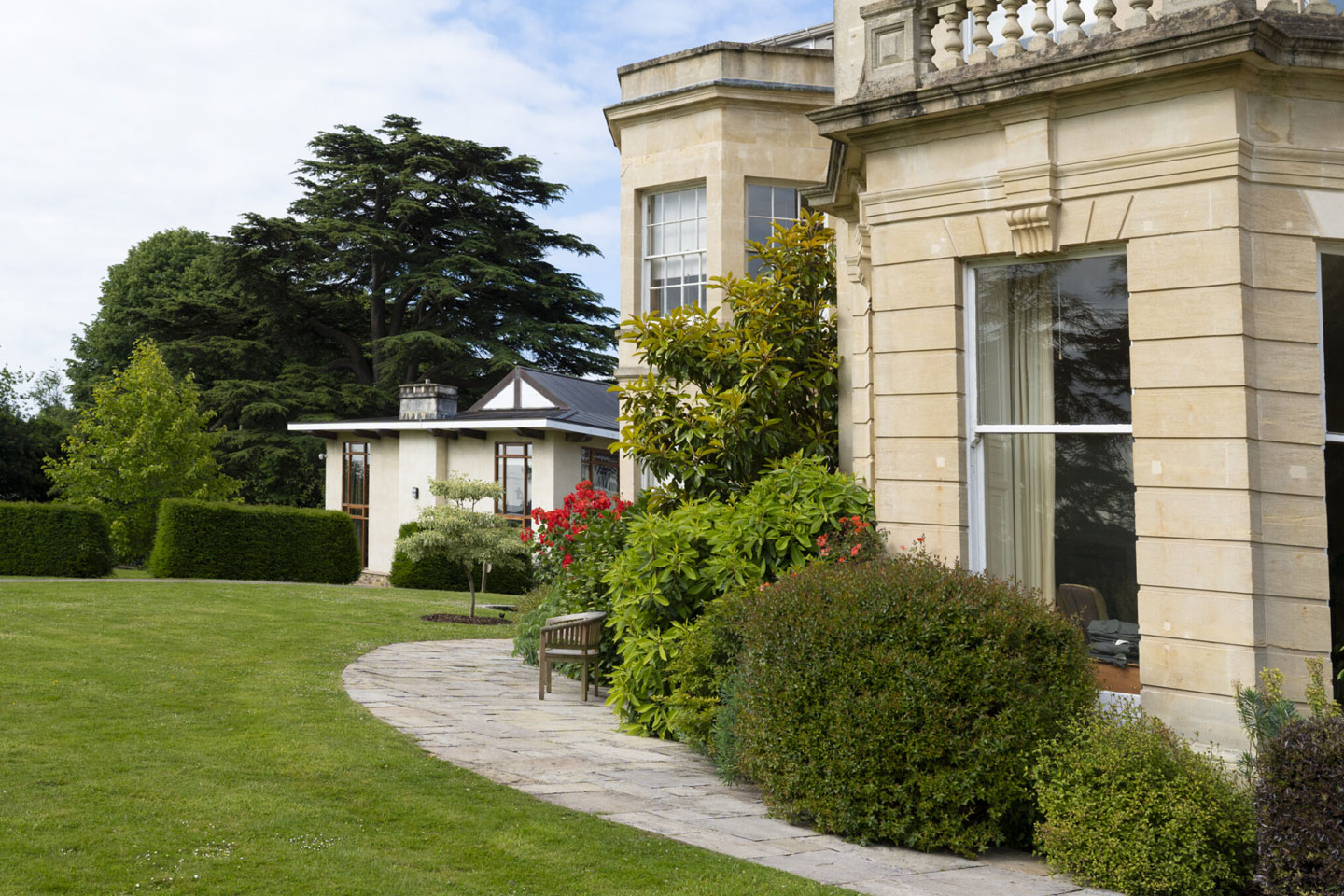
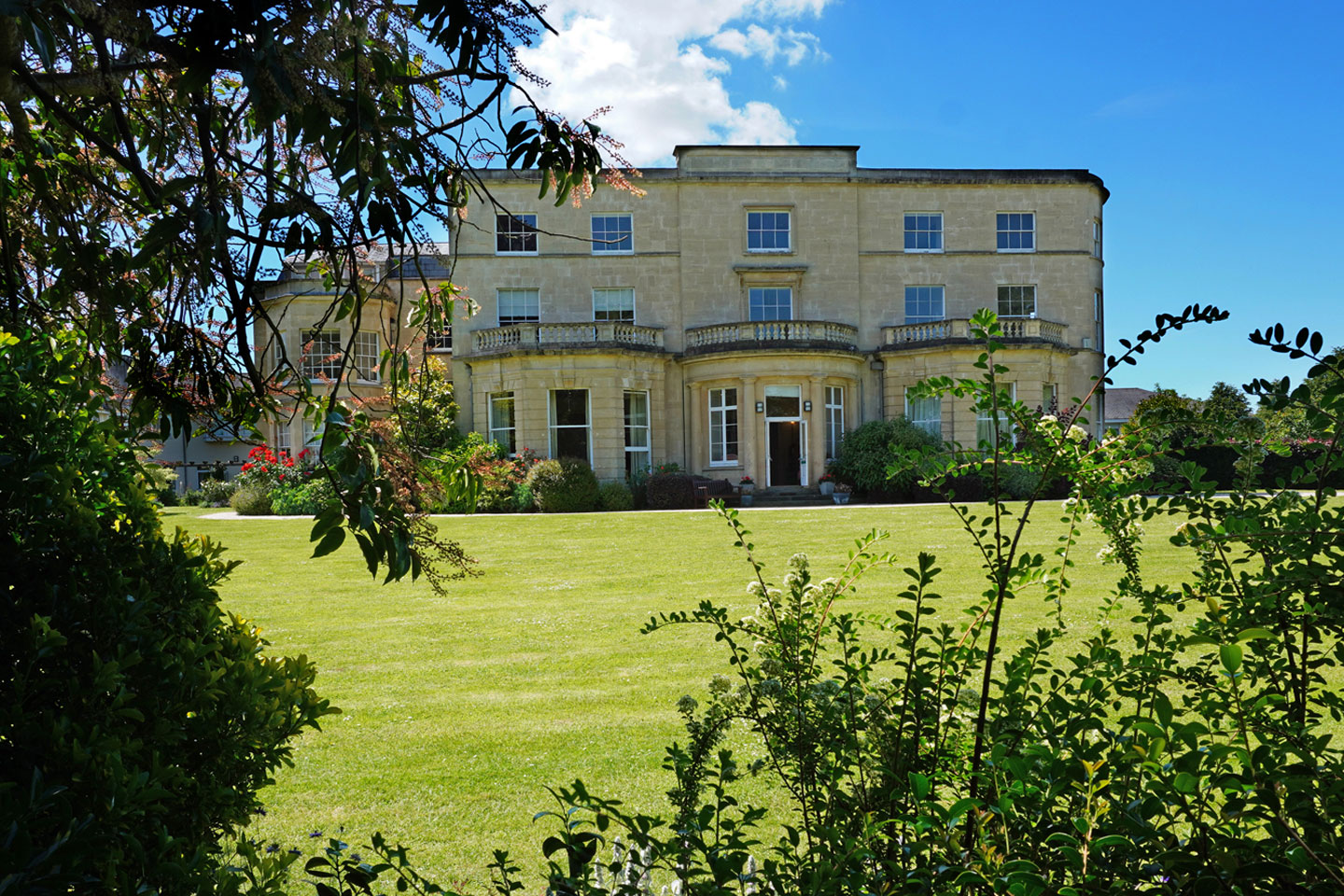
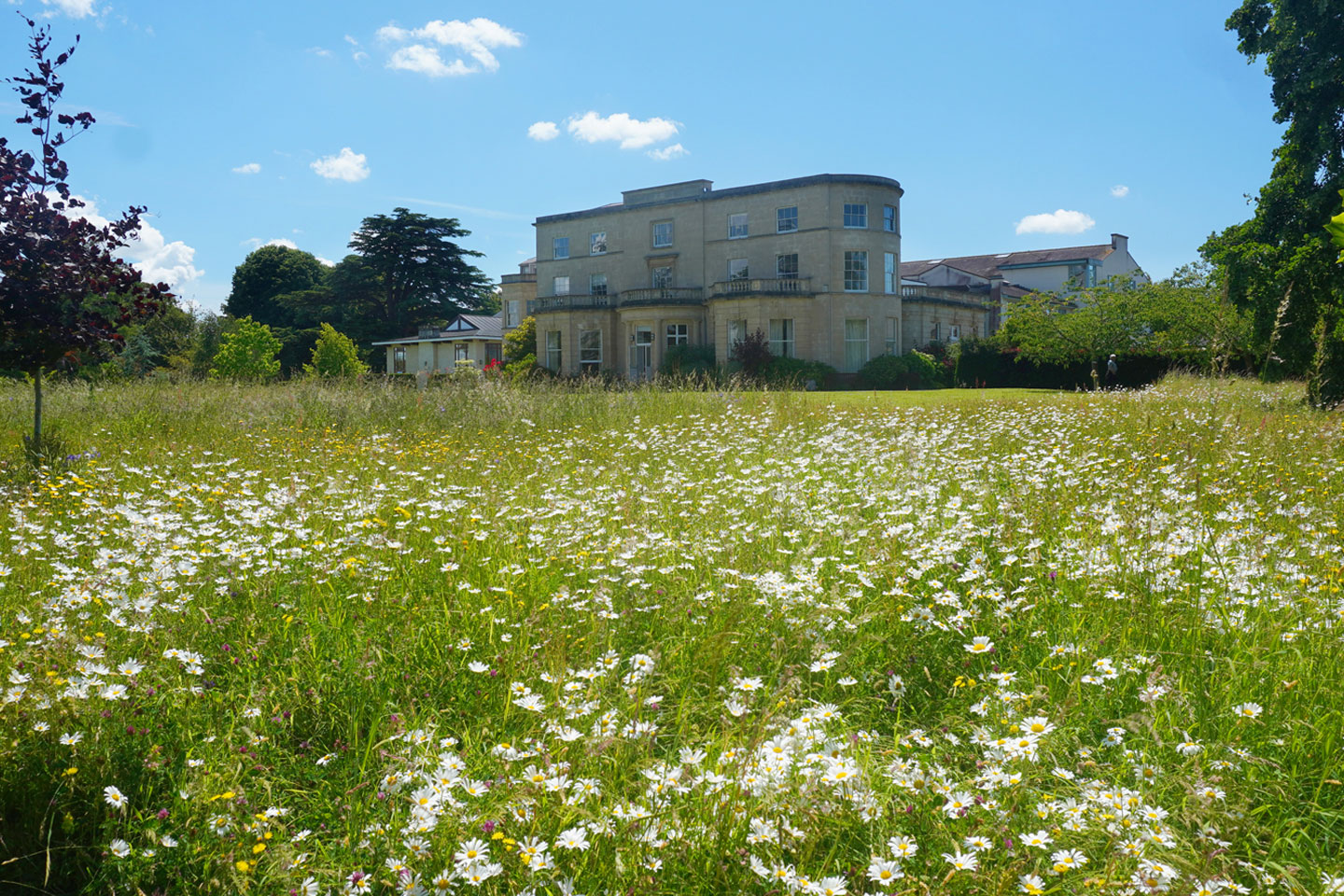
Set within four acres of beautifully designed gardens just outside Bristol, the Grade II listed Georgian mansion of Ham Green House offers a calm and reflective environment for the gathering. The venue includes peaceful outdoor spaces, accessible garden pathways and light-filled meeting rooms that open onto the surrounding landscape.
For Where We Land, the setting forms part of the experience – creating space to slow down, think differently, reconnect with creative practice and spend time with others in a more thoughtful environment. Spectroscope has an ongoing relationship with the venue and has previously created a beautiful gingko tree projection across the Georgian mansion and fountain.
Dating from the early eighteenth century, Ham Green House has a rich and unusual history. The house was once owned by the Bright family of Bristol philanthropists and was the childhood home of Richard Bright, an English physician and early pioneer in the research of kidney disease. Later, the estate was purchased by Bristol Corporation and developed as an isolation hospital supporting people through infectious illnesses. That connection to care, wellbeing and recovery continues today through the pioneering work of Penny Brohn UK.
Travel Bursary Support
A limited number of £75 travel bursaries are available to support artists travelling to the event. Bursaries will be offered on a first come, first served basis and will be prioritised for artists on low incomes or those who may otherwise be unable to attend due to travel costs. If travel costs may prevent you from attending, please get in touch to discuss support options.
Do you need to rest?
We have a limited number of subsidised accommodation spaces available on a first come, first served basis, including wheelchair accessible rooms. If you experience fatigue, fluctuating energy or long term health conditions, please get in touch to discuss accommodation or rest support.
Can’t attend in person?
We understand that not everyone will be able to attend the event in person. Following the gathering, we will create a post-event package for artists who are unable to attend on the day. This will include selected recordings, discussion highlights, workshop materials and event reflections. Information about how to request the package will be added here closer to the event.
Supported by
Where We Land has been made possible with funding from Arts Council England.